
Leading with Accountability: Best Practices for Safeguarding Vulnerable Adults
Jun 20, 2026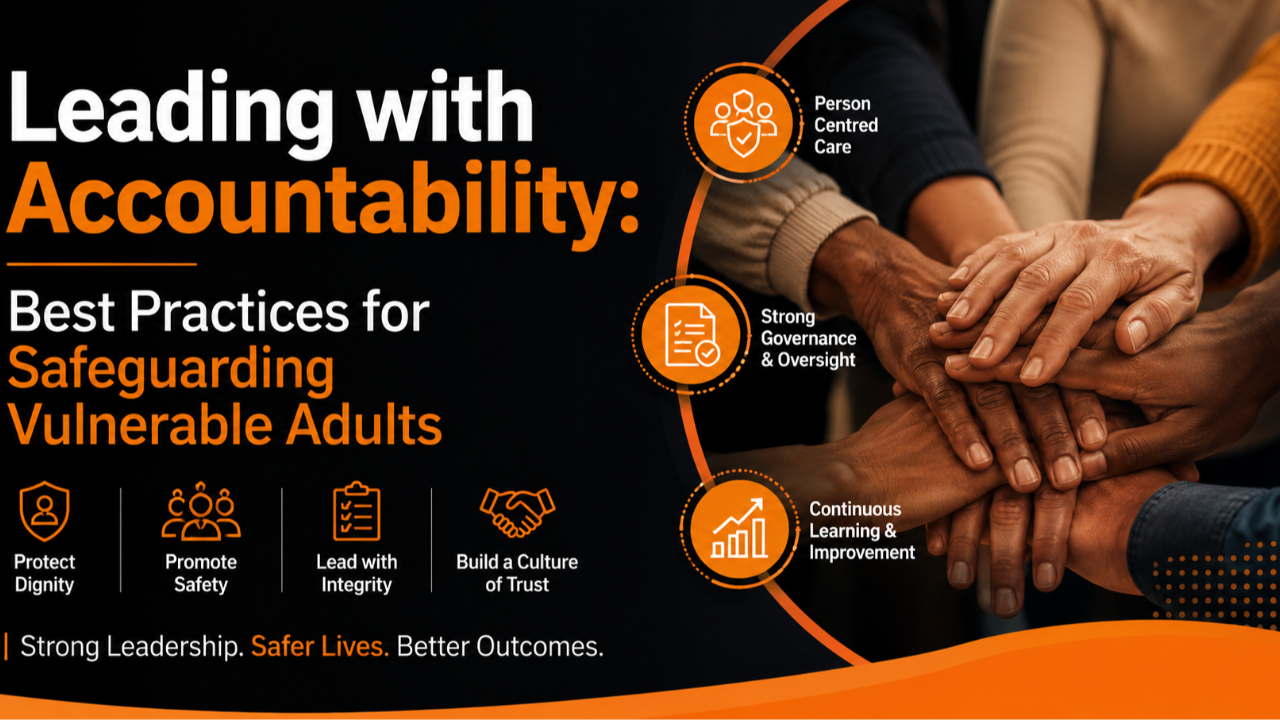
Millions of vulnerable adults, including the elderly and those with disabilities, rely on care systems for protection, yet abuse and exploitation often persist undetected.
Effective safeguarding depends on genuine accountability. When organizations and caregivers prioritize responsibility over mere policy compliance, they foster environments where vulnerable individuals remain truly safe.
This guide details evidence-based best practices for safeguarding, emphasizing accountability as the central pillar of every strategy.
What Does “Safeguarding Vulnerable Adults” Really Mean?
Safeguarding is more than a checklist or a legal requirement. At its most meaningful, safeguarding vulnerable adults means taking deliberate, proactive action to:
- Prevent abuse, neglect, and exploitation before it occurs
- Detect warning signs early through vigilant observation and reporting
- Respond swiftly and appropriately when harm has occurred or is suspected
- Empower vulnerable individuals to participate in decisions about their own safety
- Create cultures and systems where everyone takes responsibility
Vulnerable adults, such as those with disabilities, serious mental illness, or substance use disorders, have a reduced capacity to protect themselves. This group also includes elderly individuals in care and those facing homelessness or domestic violence.
Why Accountability Is the Cornerstone of Safeguarding
Safeguarding policies fail without accountability. This requires everyone, from frontline staff to senior leaders, to take responsibility for protecting vulnerable individuals and to be answerable for any failures.
Accountability in safeguarding operates at three interconnected levels:
- Individual accountability: Every caregiver, professional, or volunteer understands what they are responsible for and acts accordingly.
- Organizational accountability: Institutions have transparent policies, clear reporting structures, and genuine consequences for failures.
- Systemic accountability: Regulatory bodies, funders, and governments set standards, monitor compliance, and enforce consequences.
Best Practice 1: Build a Culture of Transparency and Psychological Safety
Effective safeguarding depends on staff and carers feeling safe to report concerns without fear. Organizations that punish whistleblowers or ignore issues allow abuse to grow unchecked.
Effective steps to build this culture include:
- Establishing anonymous reporting channels alongside formal complaint processes
- Visibly acting on concerns raised and communicating outcomes to reporters where possible
- Celebrating staff who speak up, not just those who follow procedure quietly
- Training managers to respond to concerns with curiosity and openness, not defensiveness
- Conducting regular culture surveys to gauge how safe staff feel in raising issues
Leadership is vital. When senior leaders model openness by admitting mistakes and welcoming feedback, they demonstrate that the organization truly values honesty.
Best Practice 2: Implement Robust Risk Assessment Processes
Effective safeguarding requires continuous risk assessment rather than a single intake screening. Because vulnerability is dynamic, an individual's circumstances and exposure to risk shift over time.
Best-in-class risk assessment approaches include:
- Using validated, evidence-based risk assessment tools appropriate to the population being served
- Reviewing risk assessments at regular intervals and whenever circumstances change significantly
- Involving the vulnerable adult in the assessment process wherever possible, respecting their autonomy and dignity
- Documenting risk assessments clearly and making them accessible to all relevant care team members
- Tracking patterns over time: a single incident may seem minor; a pattern of incidents tells a different story
Best Practice 3: Invest in Ongoing, Quality Training for All Staff
Safeguarding training cannot be a one-time induction event. Effective training is continuous, role-specific, and regularly updated to reflect evolving understanding of abuse dynamics, legislation, and best practice.
High-quality safeguarding training programs:
- Cover all forms of abuse and neglect, including financial exploitation, coercive control, cuckooing, and digital abuse, forms that are often underrecognized
- Use real-world scenarios and case studies to build practical judgment, not just theoretical knowledge
- Include training on unconscious bias, abuse affects all demographics, and assumptions can cause warning signs to be missed
- Address mandatory reporting obligations clearly, including what to report, to whom, and by when
- Are refreshed at least annually and updated promptly when legislation or guidance changes
- Are tracked and monitored completion rates, assessment outcomes, and knowledge retention should all be measured
Best Practice 4: Establish Clear Reporting Pathways and Act on Them
Unreported abuse persists when individuals, staff, families, or vulnerable adults, lack reporting knowledge or fear skepticism and repercussions.
Effective reporting systems have several key features:
- Clear, simple, accessible pathways that anyone can use regardless of their relationship to the organization
- Multiple channels: in-person reporting, phone hotlines, online forms, and third-party advocacy routes
- Mandatory reporting requirements clearly communicated and enforced for regulated professionals
- Acknowledgment and feedback: reporters should know their concern was received and what action was taken
- Zero tolerance for retaliation against those who report in good faith
Crucially, organizations must prove that reporting triggers action. When concerns are ignored, reporting declines and abuse persists.
Best Practice 5: Adopt Meaningful Oversight and Governance Structures
Strong governance is the organizational spine of safeguarding accountability. This means having explicit oversight mechanisms at board level, not just at operational level.
Governance best practices include:
- A designated safeguarding lead at senior leadership level with direct board reporting lines
- Regular board review of safeguarding data, trends, and serious incidents
- Independent audits of safeguarding practices not just internal self-assessments
- Clear escalation protocols so that serious concerns reach senior decision-makers without delay
- Explicit board sign-off on safeguarding policies, with review at least annually
- Embedding safeguarding as a standing agenda item at all relevant committee meetings
Best Practice 6: Respect the Voice and Autonomy of Vulnerable Adults
Effective safeguarding is collaborative, not paternalistic. Overly protective approaches can disempower individuals, damaging their dignity, resilience, and trust in support services.
Practical application of this principle includes:
- Always asking the vulnerable adult what outcome they want from a safeguarding intervention
- Providing accessible information in the person's language, format, and communication style
- Involving independent advocates where the person lacks capacity or feels unable to speak freely
- Balancing risk with the individual's right to make decisions including decisions others might consider unwise
- Reviewing the impact of safeguarding plans with the person and adjusting based on their experience
Best Practice 7: Collaborate Across Organizations and Sectors
Protecting vulnerable adults requires a coordinated effort across health, social care, law enforcement, housing, and community sectors, rather than relying on a single organization.
Effective multi-agency collaboration includes:
- Participating actively in local safeguarding partnerships, boards, or equivalent bodies
- Sharing information appropriately across organizational boundaries, respecting data protection while not allowing it to become a barrier to protection
- Developing shared protocols for responding to high-risk situations, including clear accountability for who leads the response
- Conducting joint training to build shared language, understanding, and trust across sectors
- Learning collectively from serious case reviews and multi-agency audits
Best Practice 8: Use Data to Drive Continuous Improvement
Organizations committed to safeguarding accountability use data not just to measure compliance, but to understand whether they are genuinely keeping people safe.
This means:
- Tracking key metrics: number of safeguarding concerns raised, response times, outcomes, repeat incidents
- Disaggregating data by population group to identify whether certain individuals are at greater risk or underserved by current approaches
- Benchmarking against peer organizations and sector standards
- Conducting regular file audits and practice reviews
- Using serious incident reviews to drive systemic learning, not just to assign individual blame
Data accountability requires honesty about poor performance. Organizations that hide negative data prioritize their reputation over the safety of the vulnerable, resulting in a total failure of accountability.
The Future of Safeguarding Leadership
As care systems evolve, safeguarding leadership must evolve alongside them. Increasing complexity in care needs, workforce pressures, and changing service models require leaders to remain adaptable and proactive.
Future-focused safeguarding leaders will:
- Embrace innovation and technology responsibly.
- Strengthen workforce capability.
- Foster collaborative partnerships.
- Maintain a relentless focus on person-centred care.
- Champion accountability at every level.
By embedding accountability into organisational culture, leaders can create environments where vulnerable adults are protected, empowered, and supported to live well.
Common Barriers to Accountability and How to Overcome Them
Fear of Consequences
Many staff are reluctant to raise concerns because they fear disciplinary action, conflict with colleagues, or damaging the reputation of the organization. Overcoming this requires consistent, visible protection for those who speak up and demonstrated consequences for those who retaliate.
Normalisation of Poor Practice
In environments where standards have slipped gradually, poor practice can come to seem normal. Regular external audits, fresh perspectives from outside the team, and peer benchmarking all help counter this drift.
Insufficient Resources
Understaffed, overworked care environments are environments where safeguarding is harder. Resource constraints must be named, escalated, and addressed not used as a reason to accept lower standards of protection.
Siloed Working
When teams or organizations don't share information, risks fall through the gaps. Investment in collaborative relationships and shared systems with appropriate data governance is essential.
Accountability Is Not Optional
Effective safeguarding of vulnerable adults is a vital responsibility for all of society. The practices detailed here, from psychological safety to robust governance, reflect a non-negotiable principle: protecting those at risk requires sustained accountability from everyone involved.
The goal is not bureaucracy, but ensuring vulnerable individuals live with dignity and safety through systems that truly protect them.
Are the people in our care truly safe, and how do we know?
Book a Free Discovery Call
Discover how expert consultancy and workforce development can support your organisation in building stronger integrated care systems.
Subscribe to Our Newsletter
Stay informed with the latest insights, best practices, and guidance in health and social care leadership.