
Risk Management Strategies in Advanced Dementia: Ensuring Safety with Dignity
May 11, 2026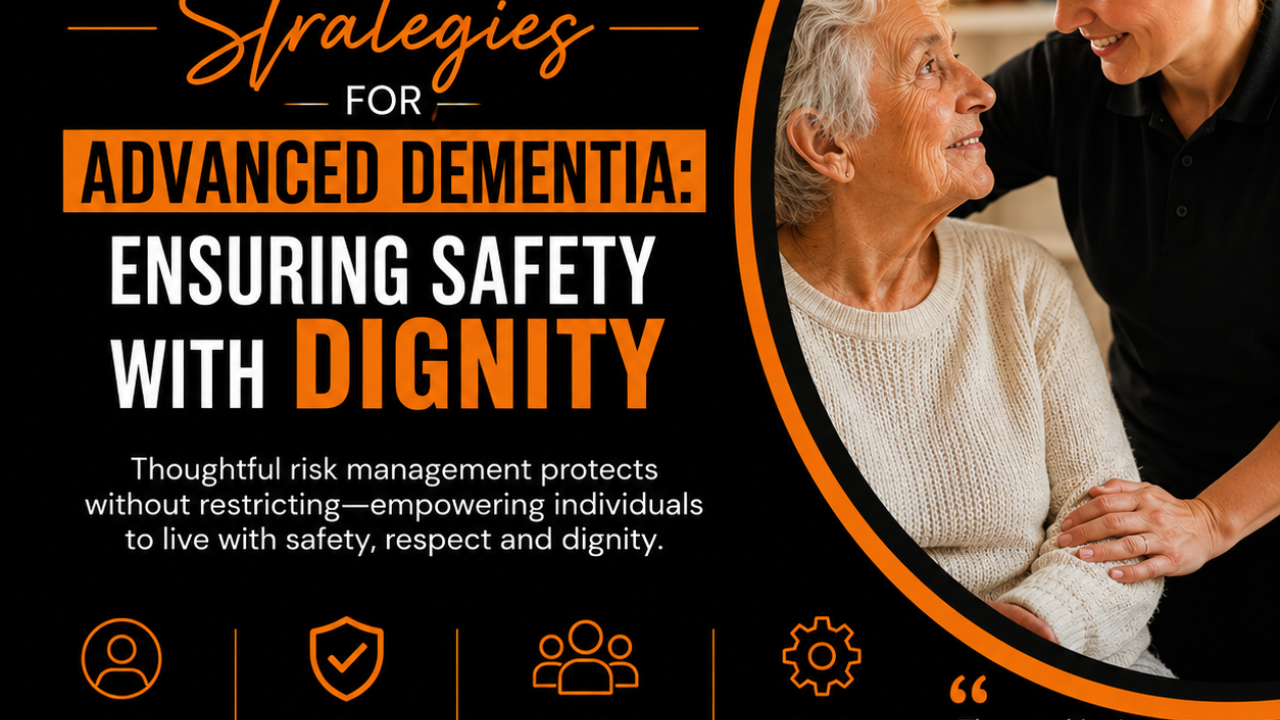
Caring for individuals with advanced dementia presents complex challenges especially when balancing safety with personal dignity and independence. As cognitive decline progresses, risks such as falls, walking with a purpose, over medication, and behavioral changes increase. However, overly restrictive care can diminish quality of life.
Effective risk management in advanced dementia care is not about eliminating risk entirely, it is about enabling safe practice, by empowering the person to live a more person-centred life.
Understanding Risk in Advanced Dementia
Risk in dementia care is multifaceted. It includes:
- Physical risks: falls, malnutrition, mobility issues
- Emotional risks: distress, anxiety, depression
- Environmental risks: unsafe living conditions
- Behavioral risks: walking with a purpose and behaviours that challenge
Recognising these risks early allows caregivers and professionals to create proactive care plans.
The Principle of Positive Risk-Taking
Positive risk-taking is a key concept in dementia care. It means allowing individuals to make choices, even when there is some level of risk involved.
Instead of asking, “How do we prevent all risks?”, ask:
“How can we enable and empower safe choices while preserving dignity and respect?”
This approach promotes:
- Autonomy
- Confidence
- Emotional well-being
Key Risk Management Strategies
1. Person-Led and Centred Risk Assessments
Every individual is unique. Risk assessments should consider:
- Personal history
- Preferences and routines
- Cognitive and physical abilities
A tailored approach ensures care plans enable and empower.
2. Environmental Modifications
Small changes can significantly reduce risks:
- Good colour contrast Install grab bars and non-slip flooring
- Improve lighting
- Remove hazards and clutter
- Use clear signage for orientation
These adjustments enhance safety without restricting movement.
3. Effective Communication Techniques
As dementia progresses, communication becomes more of a challenge.
Best practices include:
- Using simple, clear language
- Maintaining eye contact
- Observing non-verbal cues
- Practicing patience and empathy
This reduces distress and prevents behavioral escalation.
4. Technology for Safety
Modern tools can support risk management:
- GPS tracking devices for people walking with a purpose, with clear lawful safeguards under the mental capacity and human rights
- Fall detection systems for people who may be at risk of falling
When used ethically, technology enhances safety while maintaining independence.
5. Staff Training and Awareness
Care professionals must be equipped to:
- Identify early warning signs
- Respond to behavioral changes
- Apply de-escalation techniques
Ongoing training ensures consistent, high-quality care.
6. Collaborative Care Planning
Involving families and multidisciplinary teams improves outcomes.
Collaborative planning ensures:
- Shared decision-making
- Consistency in care
- Better understanding of individual needs
Balancing Safety and Dignity
Safety should never come at the cost of dignity.
For example:
- Instead of restricting movement, create safe walking paths
- Instead of removing choices, offer guided options
- Instead of enforcing routines, adapt to personal preferences
This balance fosters trust and improves quality of life.
Common Challenges in Risk Management
- Fear of liability leading to over-restriction
- Limited staffing or resources
- Communication barriers
- Resistance from individuals or families
Addressing these challenges requires a culture shift toward person-led and person centred care.
Risk management in advanced dementia is about thoughtful balance, not control. By combining structured strategies with compassionate care, professionals can ensure both safety and dignity.
Empowering individuals, even in advanced stages, leads to better emotional well-being and a higher quality of life.
Are you confident your current approach balances safety with dignity in advanced dementia care?
Discover how expert-led training and tailored strategies can transform your care approach and explore more today.
Book a Free Discovery Call
Discover how expert consultancy and workforce development can support your organisation in building stronger integrated care systems.
Subscribe to Our Newsletter
Stay informed with the latest insights, best practices, and guidance in health and social care leadership.