
From Training to Action: Bridging the Gap in Dementia Care and Safeguarding Practice
May 02, 2026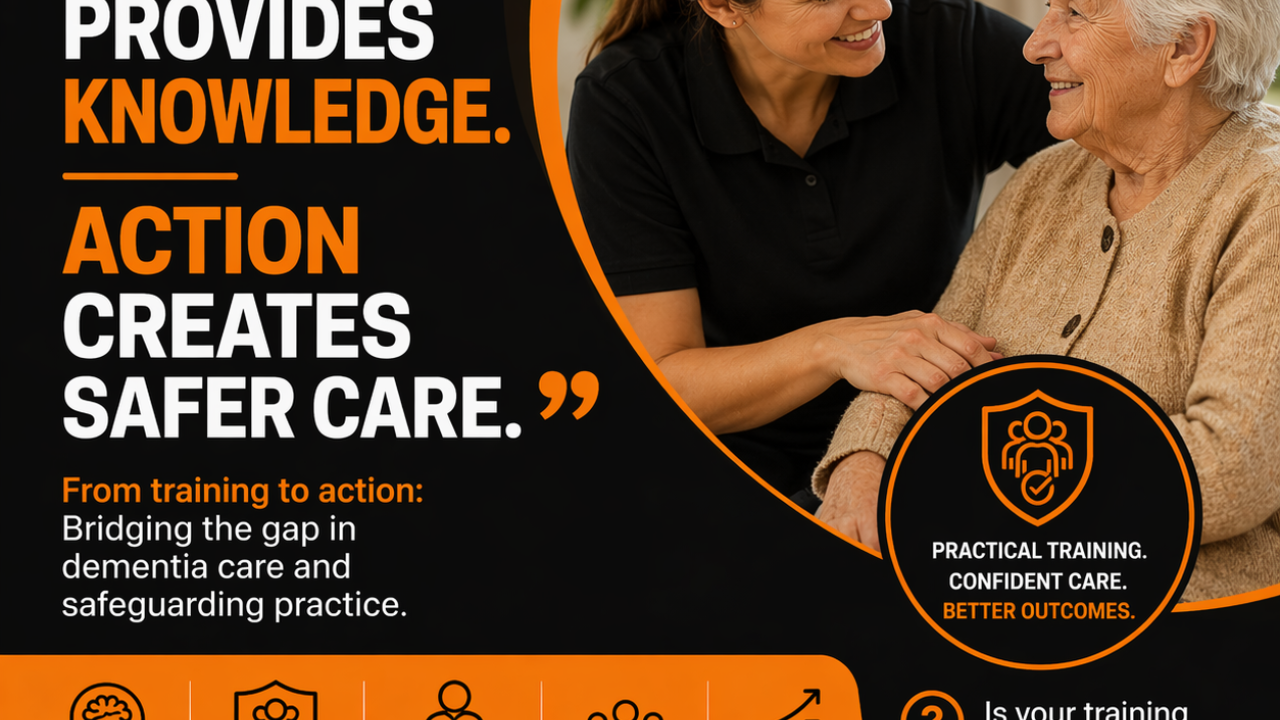
Despite significant investment in staff training including workshops and certifications in areas such as dementia care and safeguarding, many health and social care organisations struggle to translate this knowledge into consistent, high-quality practice. This gap between training and real-world application is a major challenge in dementia care and safeguarding. Professionals may grasp the theory of person-led and person centred dementia care, safeguarding adults, and the ability to identify abuse, neglect and harm, however, implementing this into practice effectively in demanding, high-pressure environments is difficult. Without practical implementation, training fails to improve outcomes for adults at risk.
Why the Knowledge-to-Practice Gap Exists
Many care providers deliver excellent training content, but staff often face barriers when trying to apply what they have learned.
These challenges may include:
- Lack of confidence in responding to safeguarding concerns
- Difficulty recognising subtle signs of neglect or abuse
- Limited opportunities for hands-on practice
- Workplace cultures that prioritise routine over reflection
- Inconsistent leadership support for best-practice implementation
Within care settings, these gaps can have implications on people living with dementia and the application of safeguarding practice.
When staff are unsure how to act on safeguarding concerns or struggle to adapt care approaches for individuals living with dementia, risks increase leading to poorer outcomes, emotional distress, and preventable abuse, neglect and harm.
That is why bridging the gap between dementia care training and practical safeguarding application is essential.
Why Practical Application Matters in Dementia Care
People living with dementia often rely on caregivers to recognise changes in behavior, identify risks, and respond compassionately.
Training provides the knowledge, but practical application builds the ability to:
- Recognise behavioural indicators of distress
- Identify potential safeguarding risks early
- Communicate effectively with adults at risk
- Apply person-led and person centred care strategies in real time
- Respond confidently to safeguarding concerns
These are not skills developed through theory alone.
Interactive dementia care training needs to include real-world scenarios, reflective learning, and continuous reinforcement. Confident application of learning translates to safer, more responsive, and person-led and person centred care.
Moving Beyond Compliance-Based Training
Too often, dementia care and safeguarding training is treated as a compliance exercise.
Organisations may focus on completion rates rather than competency outcomes.
But effective safeguarding training should go beyond “Did staff complete the course?” and ask:
- Can staff identify safeguarding concerns confidently?
- Can they apply dementia care principles in challenging situations?
- Are they equipped to make safe, informed decisions?
The goal should be practice-ready competence, not simply attendance.
This means providing training that is:
- Scenario-based
- Reflective
- Skills-focused
- Reinforced over time
- Relevant to real workplace challenges
This approach transforms training from a checklist requirement into a tool for improving care quality.
How Better Training Improves Safeguarding Outcomes
When care professionals are equipped to apply what they learn, the impact is significant.
Organisations often see:
- Earlier recognition of safeguarding concerns
- Improved staff confidence
- Better dementia care outcomes
- Reduced incidents of abuse, neglect or harm
- Stronger compliance with safeguarding standards
- Higher quality person-led and person centred care
In other words, practical dementia care training strengthens safeguarding practice at every level.
For providers committed to improving standards, investing in implementation-focused education is one of the most effective ways to protect vulnerable adults.
Turning Learning into Better Care
Effective dementia care and safeguarding training is judged by the actions it enables, not just the information delivered.
Bridging the gap between training and practice ensures safer, more compassionate care and protects adults at risk.
Organisations focused on practical dementia safeguarding skills over mere knowledge create lasting care quality improvements.
In dementia care, knowledge is important, but action drives outcomes.
Does your dementia care training build staff confidence for safeguarding, or just meet compliance?
Discover how practical, skills-based training can strengthen safeguarding outcomes and improve dementia care across your organization.
Book a Free Discovery Call
Discover how expert consultancy and workforce development can support your organisation in building stronger integrated care systems.
Subscribe to Our Newsletter
Stay informed with the latest insights, best practices, and guidance in health and social care leadership.