
Technology and Dementia Care: Practical Tools for Safer Independent Living
May 23, 2026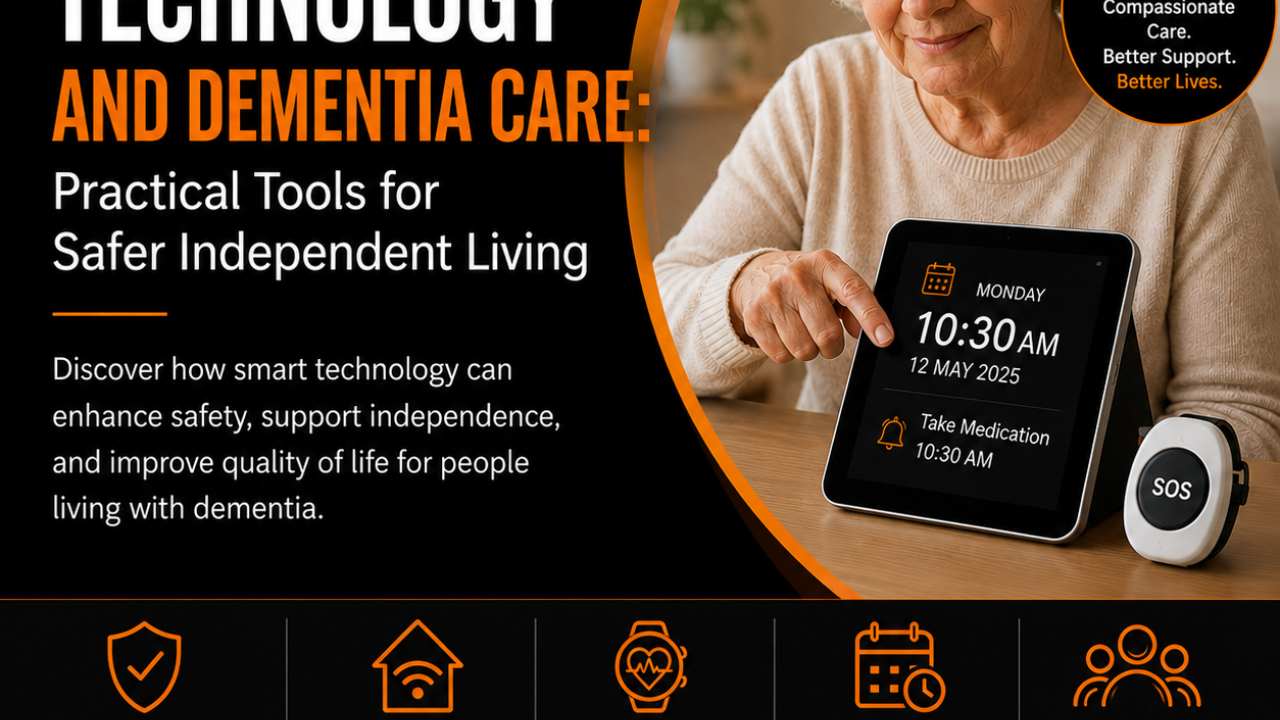
Modern dementia care increasingly utilizes technology to bolster safety, independence, and dignity. Enabling individuals to stay in familiar environments significantly enhances emotional wellbeing.
Assistive devices help families and providers balance the need for autonomy with essential safeguarding.
Tools like medication reminders, GPS trackers, and smart monitoring systems are fostering safer, person-centered care.
Why Technology Matters in Dementia Care
Dementia affects memory, communication, judgement, orientation, and daily functioning. As symptoms progress, everyday tasks can become increasingly difficult or unsafe without support.
Technology does not replace compassionate human care. Instead, it complements care by helping individuals maintain routines, reduce risks, and remain connected with their support networks.
When used appropriately, dementia care technology can help:
- Promote safer independent living
- Reduce anxiety and confusion
- Support daily routines
- Improve communication
- Enhance safeguarding measures
- Reduce caregiver stress
- Encourage dignity and autonomy
Importantly, technology should always be introduced through a person-centred approach that respects the individual’s preferences, abilities, and comfort levels.
Practical Technology Tools Used in Dementia Care
1. Medication Reminder Systems
Missed or incorrect medication can lead to serious health risks. Automated medication dispensers and reminder apps can help individuals remember when to take medications safely and consistently.
Features may include:
- Audible reminders
- Locked dispensing systems
- Notifications to carers if doses are missed
- Scheduled medication alerts
These tools can reduce medication errors while supporting confidence and independence.
2. GPS Tracking and Location Devices
Wandering or becoming disoriented is a common concern in dementia care. GPS-enabled devices can help families and carers quickly locate someone if they become lost.
Examples include:
- GPS watches
- Smart insoles
- Mobile tracking applications
- Wearable emergency alert devices
Used ethically and with consent where appropriate, these technologies can enhance safety while allowing greater freedom of movement.
3. Smart Home Technology
Smart home systems can improve safety within the home environment by automating everyday functions and reducing potential hazards.
Examples include:
- Motion-sensor lighting
- Automated door alerts
- Smart smoke detectors
- Voice-activated assistants
- Automatic stove shut-off systems
These tools help create a safer environment while reducing confusion and risk.
4. Fall Detection and Emergency Response Systems
Falls are a major concern for older adults and individuals living with dementia. Wearable fall detection devices can automatically alert carers or emergency contacts when assistance is needed.
Benefits include:
- Faster emergency response
- Increased confidence living at home
- Reduced fear of falls
- Improved peace of mind for families
5. Digital Calendars and Routine Support
Maintaining familiar routines is essential in dementia care. Digital prompts and visual scheduling tools can assist with orientation and reduce anxiety.
Helpful tools may include:
- Electronic day clocks
- Voice reminder systems
- Smart displays with calendars
- Automated prompts for appointments or meals
These supports can strengthen daily structure and reduce reliance on constant caregiver reminders.
The Importance of Safeguarding in Technology-Based Dementia Care
While technology offers many benefits, safeguarding and ethical considerations remain critical.
Key considerations include:
- Privacy and consent
- Data security
- Respect for autonomy
- Individual capacity assessments
- Avoiding over-reliance on monitoring systems
Technology should empower individuals rather than restrict them. The best outcomes occur when digital tools are integrated into compassionate, person-centred dementia care planning.
Healthcare providers and families should regularly review whether technologies remain appropriate as needs change over time.
Supporting Families and Caregivers Through Technology
Caregiver burnout is a growing concern in dementia care. Technology can also provide support for families and professional carers by reducing stress and improving communication.
Examples include:
- Shared care coordination apps
- Remote monitoring systems
- Video communication tools
- Online support communities
- Automated alerts and updates
When carers feel more supported, they are better equipped to provide consistent, high-quality care.
The Future of Dementia Care Technology
Emerging innovations continue to shape the future of dementia care.
Advancements may include:
- AI-assisted cognitive support tools
- Predictive fall-risk monitoring
- Virtual reality for reminiscence therapy
- Smart behavioural monitoring systems
- Advanced telehealth services
As technology evolves, the focus must remain on preserving dignity, individuality, and meaningful human connection.
Technology transforms dementia care with tools for safer independent living, better safeguarding, and improved quality of life.
Thoughtful implementation of assistive technology keeps individuals connected and confident while reducing pressure on caregivers.
Effective care balances innovation with empathy to ensure safety and independence coexist.
Looking to strengthen your dementia care knowledge and practical skills?
Explore professional training, resources, and support designed to help you deliver safer, more effective person-centred care.
Book a Free Discovery Call
Discover how expert consultancy and workforce development can support your organisation in building stronger integrated care systems.
Subscribe to Our Newsletter
Stay informed with the latest insights, best practices, and guidance in health and social care leadership.