
Domestic Abuse in Later Life: When Dementia Complicates Disclosure
Jul 04, 2026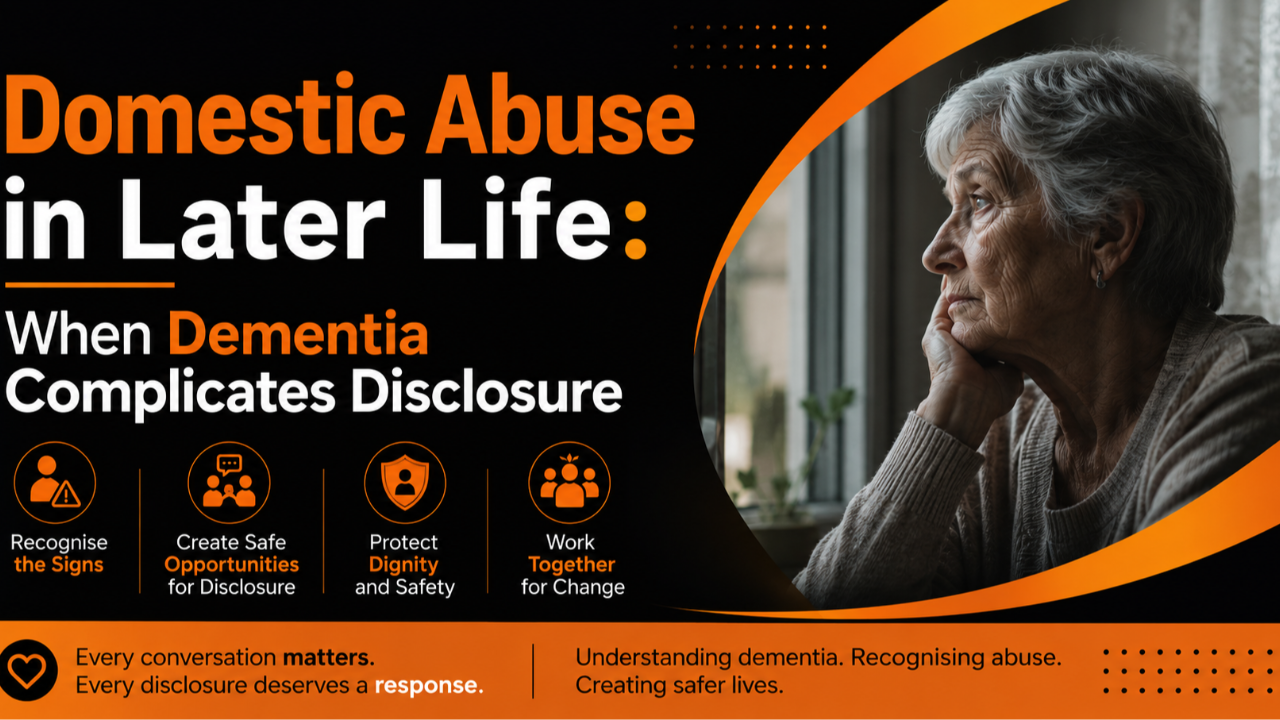
Domestic abuse occurs in every age group, and it significantly impacts older adults. Dementia complicates this further, as cognitive impairment can hinder memory and communication, making abuse difficult to detect.
With dementia rising, health and social care professionals must understand how this abuse manifests.
Addressing the intersection of dementia and domestic abuse is important ensuring the safety and dignity of adults at risk.
Understanding Domestic Abuse in Older Adults
Domestic abuse refers to patterns of controlling, coercive, threatening, degrading, or violent behaviour between individuals who are personally connected.
In later life, abuse may involve:
- Physical violence
- Emotional or psychological abuse
- Financial exploitation
- Neglect
- Coercive control
- Sexual abuse
- Social isolation
Abuse can occur within long-standing marriages, partnerships, family relationships, or caregiving arrangements.
For older adults living with dementia, dependency on others for daily support can increase the risk and create circumstances where abuse remains hidden for extended periods.
Why Dementia Makes Disclosure Difficult
One of the greatest safeguarding challenges is that individuals with dementia may struggle to disclose abuse clearly or consistently.
Communication Difficulties
As dementia progresses, individuals may experience:
- Difficulty finding words
- Reduced ability to describe events
- Challenges sequencing information
- Problems recalling specific incidents
This can make disclosures appear fragmented or confusing, even when the abuse is genuine.
Memory Impairment
Professionals sometimes face uncertainty when a person reports abuse but cannot recall details consistently.
However, inconsistency should never be viewed as evidence that abuse did not occur.
Trauma, fear, cognitive impairment, and communication difficulties can all affect recollection.
Fear of Consequences
Many older adults fear:
- Losing their caregiver
- Being moved into residential care
- Family conflict
- Retaliation from the abuser
For people living with dementia, dependence on the perpetrator may intensify these fears.
Reduced Insight and Awareness
Some people living with dementia may not fully recognise abusive behaviour, particularly if coercive control has existed for many years within the relationship.
What professionals identify as abuse may be viewed by the individual as normal or unavoidable.
The Unique Dynamics of Abuse in Dementia Care
Domestic abuse involving dementia often differs from traditional safeguarding cases.
Increased Caregiver Stress
Caring for a person living with dementia can be emotionally and physically demanding.
While caregiver stress does not excuse abusive behaviour, it can contribute to situations where:
- Verbal aggression escalates
- Neglect develops
- Frustration results in physical harm
- Financial misuse occurs
Understanding these dynamics helps professionals assess risk appropriately while maintaining accountability.
Dependency and Power Imbalances
Dementia frequently creates significant dependency.
The caregiver may control:
- Finances
- Medication
- Transportation
- Social contact
- Access to healthcare
Such control can increase opportunities for abuse and reduce opportunities for disclosure.
Long-Term Relationship Patterns
Some abusive relationships may have existed for decades before dementia emerged.
In these situations, cognitive decline can increase the risk and make established patterns of control even more evident.
Warning Signs Professionals Should Recognise
Safeguarding concerns may be subtle and require careful observation.
Potential indicators include:
Physical Indicators
- Unexplained injuries
- Repeated falls with inconsistent explanations
- Poor hygiene
- Malnutrition
- Medication mismanagement
Emotional Indicators
- Fearfulness around a caregiver
- Anxiety or withdrawal
- Sudden changes in mood
- Distress during interactions
Behavioural Indicators
- Reluctance to speak openly
- Contradictory explanations
- Social isolation
- Missed healthcare appointments
Financial Indicators
- Unexplained withdrawals
- Missing possessions
- Sudden changes to wills or financial arrangements
- Restricted access to personal funds
No single sign confirms abuse, but patterns should prompt further safeguarding inquiry.
Best Practices for Supporting Disclosure
Creating opportunities for disclosure requires patience, skill, and person-led and person centred practice.
Build Trust Over Time
People living with dementia may require multiple conversations before feeling comfortable sharing concerns.
Professionals should:
- Use familiar communication techniques
- Maintain consistency
- Avoid rushing discussions
- Demonstrate empathy and respect
Speak Privately Whenever Possible
Private conversations can reduce the influence of controlling individuals and create safer opportunities for disclosure.
Use Clear and Simple Language
Questions should be:
- Short
- Concrete
- Non-leading
- Easy to understand
For example:
- "Do you feel safe at home?"
- "Has anyone hurt you?"
- "Has anyone stopped you from seeing people you want to see?"
Focus on Emotional Experience
Even when factual details are unclear, emotional responses can provide important safeguarding information.
Professionals should pay attention to:
- Fear
- Distress
- Anxiety
- Hesitation
- Changes in behaviour
The Importance of Multi-Agency Safeguarding
No single organisation can effectively manage complex safeguarding concerns involving dementia and domestic abuse.
Successful intervention often requires collaboration between:
- Safeguarding adults services
- Healthcare providers
- Dementia specialists
- Social workers
- Legal professionals
- Advocacy services
- Community organisations
A coordinated approach improves risk assessment, strengthens support planning, and ensures that adults at risk remain at the centre of decision-making.
Promoting a Person-Led and Person Centred Approach
Safeguarding is not simply about protection, it is also about empowerment.
A person-led and person centred approach recognises that individuals living with dementia still have rights, preferences, and the ability to participate in decisions affecting their lives whenever possible.
Professionals should seek to:
- Maximise participation
- Respect autonomy
- Support informed decision-making
- Balance safety with personal choice
- Preserve dignity throughout safeguarding interventions
This approach helps ensure that safeguarding remains compassionate as well as effective. It will be about making safeguarding personal
Domestic abuse in older adults is frequently hidden, as dementia-related communication and memory issues delay disclosure until abuse, neglect and harm escalates.
Health and social care professionals must be vigilant; understanding these specific cognitive challenges enables earlier risk identification and protection for those unable to advocate for themselves.
With dementia rates rising, enhancing safeguarding expertise is essential.
How confident is your organisation in recognising domestic abuse when dementia affects communication and disclosure?
Book a Free Discovery Call
Discover how expert consultancy and workforce development can support your organisation in building stronger integrated care systems.
Subscribe to Our Newsletter
Stay informed with the latest insights, best practices, and guidance in health and social care leadership.